

The allure of building a digital storefront, listing products, and collecting profits without ever touching inventory has made dropshipping one of the most popular entry points into e-commerce. It is frequently marketed as a zero-cost, hands-off path to passive wealth.
The reality of operating a modern e-commerce brand is far more nuanced. While the operational framework remains highly efficient, running a sustainable business requires a deep understanding of customer acquisition costs, supply chain logistics, and user experience.
Dropshipping is an e-commerce fulfillment model where a retailer sells products without holding inventory. When an order is placed, the retailer purchases the item from a third-party supplier, who ships it directly to the end customer.
The Hook: Why the “Get Rich Quick” Myth Is Dead
For years, the internet has been flooded with content promising that anyone can make thousands of dollars a week overnight using basic automation tools. This narrative completely ignores the structural shifts in the e-commerce landscape. Today, rising acquisition costs on paid ad networks and heightened consumer expectations for rapid shipping have eliminated the viability of low-effort, low-quality storefronts.
To succeed now, you have to treat dropshipping exactly like what it is: a supply chain management framework, not a marketing gimmick. This guide provides a direct, operational look at how the model functions on modern platforms like Shopify, what your actual financial commitments will look like, and how to navigate the operational friction that clean, sustainable brands manage every day.
We’ll also highlight a few apps and integration frameworks that make inventory syncing and tracking much easier for Shopify merchants.

Bring your ideas to life for $1/month
The future of business is yours to shape. Sign up for a free trial and enjoy 3 months of Shopify for $1/month on select plans.
How Has the Shopify Dropshipping Business Model Evolved?
To understand how a dropshipping store works, you must first look at the traditional supply chain vs. the decentralized fulfillment model. In a standard retail setup, a brand buys inventory upfront in wholesale quantities, stores it in a warehouse, and handles fulfillment internally or via a third-party logistics (3PL) provider.
In a dropshipping framework, the sequence of transactions changes completely. The retailer acts as the customer-facing brand, handling customer acquisition, web design, copy, and first-line support, while the supplier handles the physical warehousing and logistics.
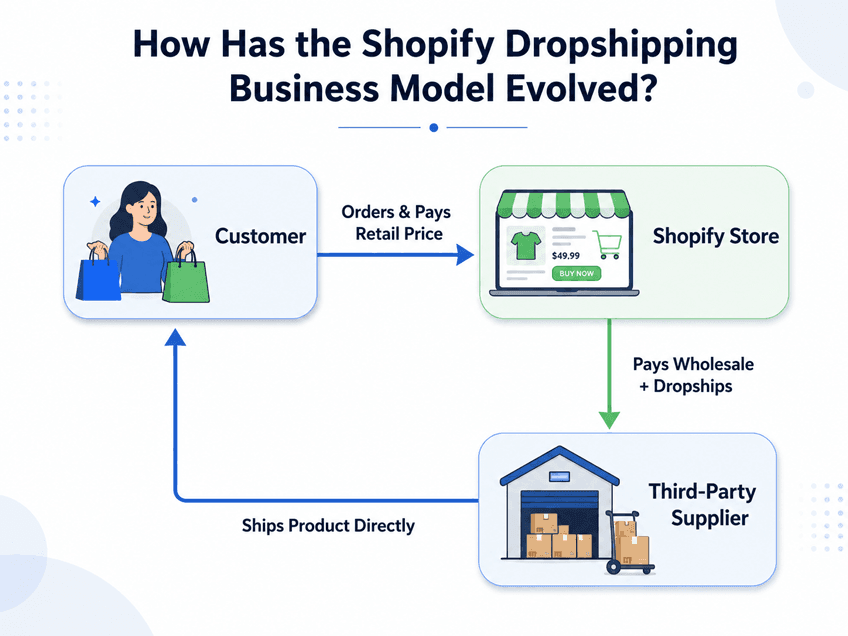
The day-to-day workflow follows a strict structural sequence:
- A customer visits your custom Shopify store and purchases an item for $50.
- Your store passes the order data to your connected dropshipping app or supplier network.
- You pay the supplier their wholesale price—for example, $20 plus shipping fees.
- The supplier packages the product and ships it directly to the customer’s address with your brand info on the invoice.
- You retain the $30 gross profit margin before deducting advertising, platform fees, and operational expenses.
The Real Numbers Behind Average Dropshipping Profit Margins
Is dropshipping profitable? Yes, but your structural pricing model must accommodate hidden operational friction. According to industry data, the global dropshipping market size reached an estimated $351.8 billion, showing that consumer transaction volume through this model is massive. However, individual store profitability varies wildly based on niche selection and conversion rate optimization (CRO).
| Expense Category | Typical Percentage / Cost Range | Impact on Your Business |
| Gross Profit Margins | 10% to 30% | The baseline revenue left over after paying your supplier for the physical goods. |
| Customer Acquisition Cost (CAC) | Varies by ad platform ($15–$45+) | The total ad spend required to generate a single conversion on your checkout page. |
| Shopify Platform & App Fees | Basic plans start around $29–$39/mo | Monthly fixed software overhead required to keep your system operational. |
| Payment Processor Fees | ~2.9% + $0.30 per transaction | The cost taken by gateways (Shopify Payments, PayPal, Stripe) to process capital. |
For instance, imagine a Shopify store selling customized jewelry. If your average order value (AOV) is $35, and your supplier charges $10 for production and shipping, your starting room is $25.
If your Facebook marketing costs yield a CAC of $20, your true net profit per order shrinks to $5. This thin margin underscores why maximizing your conversion funnel is just as critical as finding a low wholesale price.
Recommended Blogs for You:
👉 How to Reduce FedEx Shipping Costs for Shopify Domestic and International Orders
👉 How to Run a World Cup Prediction Campaign on Shopify
👉 Shopify Sales Funnel Guide: How to Turn Visitors into Customers
👉 How to Optimize Your Shopify Store for AI Search (Practical GEO Guide for 2026)
Does Dropshipping Require Money to Start as a Beginner?
One of the most persistent pieces of misinformation is that you can start a dropshipping business completely for free. While it requires significantly less capital than leasing a physical warehouse or buying $10,000 in upfront inventory, your minimum investment will never be zero.
To launch a legitimate, secure storefront that consumers actually trust, you should anticipate several foundational costs:
- E-commerce Platform Costs: Your core Shopify subscription, secure domain name registration, and crucial app plugins (such as currency switchers, advanced product review widgets, or sticky add-to-cart bars).
- Sample Product Testing: Never sell an item you haven’t personally ordered, unboxed, and tested. You need to verify shipping times, packaging quality, and product durability firsthand.
- Initial Marketing Budget: Whether utilizing paid search engine marketing, social video ads, or influencer seeding, getting eyes on a brand-new website requires a dedicated testing budget.
Without this baseline capital, merchants often cut corners on web design or customer service, resulting in high cart abandonment rates and poor brand health.
How to Find High-Quality Dropshipping Suppliers for Shopify
Your customer retention is entirely dependent on your supplier’s operational integrity. If your partner uses poor packaging, sends defective items, or misrepresents tracking numbers, your brand takes the blame, leading to payment gateway holds and negative reviews.
When sourcing partners via platforms like AliExpress, Zendrop, or specialized global supplier directories, use this evaluation framework:
1. Automated Inventory Integration
Ensure the supplier integrates directly with Shopify via API or trusted applications. Your product pages must update stock availability in real time. If a customer buys an item that is quietly out of stock at the supplier’s warehouse, you are forced to issue a friction-heavy refund.
2. Verified Shipping & Tracking Capabilities
Do not trust estimated delivery windows blindly. Request clear documentation on their average transit times to your primary target markets (e.g., US, UK, Canada). Ensure every package utilizes trackable, reliable shipping carriers so your post-purchase automated emails can accurately populate tracking data in Shopify.
3. Clear Communication Channels
Test their support response times before partnering. Send technical questions about their manufacturing capabilities or custom packaging options. If a supplier takes four days to respond to a pre-sale inquiry, they will likely go completely silent when you are dealing with a critical shipping delay affecting dozens of your customers.
Optimizing Your Shopify Store Conversion Rate for Better Returns
Because dropshipping margins are heavily impacted by ad costs, your digital storefront cannot afford design friction. Traffic bounce rates directly degrade your bottom line. To convert cold traffic into buyers, focus on key UX and CRO elements:
- Mobile-First Checkout Design: The majority of top-of-funnel social media traffic arrives via mobile devices. Ensure your theme is exceptionally fast, navigation menus are minimalist, and your checkout flows seamlessly without intrusive pop-ups that break the user experience.
- Social Proof and Reviews: New brands lack organic trust. Display transparent customer feedback, high-resolution user-generated imagery, and clear product sizing charts near the add-to-cart button to minimize customer hesitation.
- Clear Policy Microcopy: Place clear links to your return policy, shipping timelines, and contact information directly in your footer menu. Transparency around delivery timelines reduces chargeback risks and builds long-term authority.
Handling Returns and Customer Service Obstacles in High-Ticket Dropshipping
Returns are a natural part of running any retail business. In a dropshipping model, managing them requires an established, proactive policy before your first order ships. When an item arrives damaged or a customer requests an exchange, you cannot simply tell them to ship it back to an overseas manufacturing warehouse; that ruins the user experience.
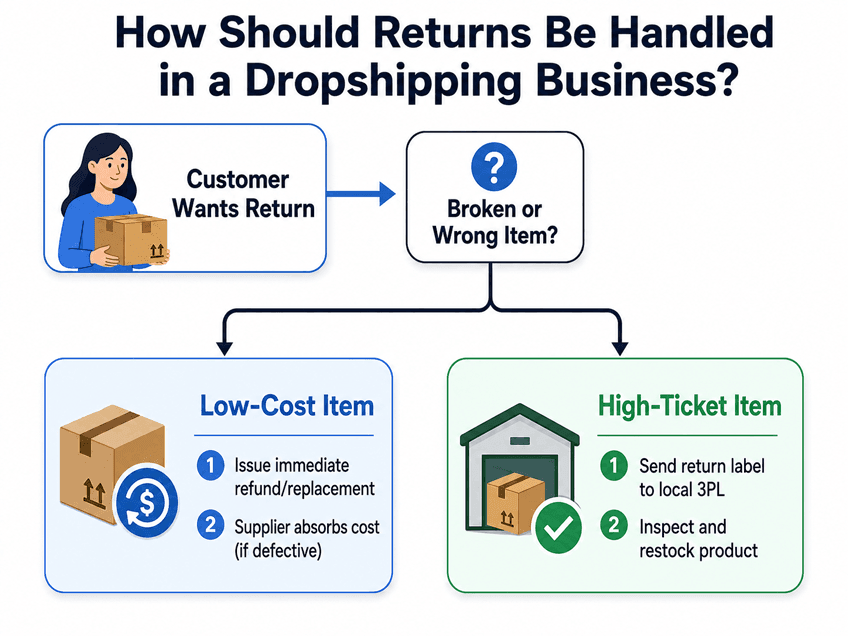
Experienced e-commerce strategists typically handle returns using two primary approaches based on item value:
- For Low-Cost Items ($15–$25): It is often more cost-effective to let the customer keep the item and simply ship a replacement or issue a full refund immediately. The cost of international return shipping frequently exceeds the wholesale cost of the product itself.
- For High-Ticket Dropshipping Items: Secure a domestic return address or partner with a specialized prep warehouse to inspect returned items. Once verified as undamaged, these items can be restocked and shipped out manually to fulfill future domestic orders.
Always ensure your written refund policy on Shopify explicitly dictates who covers return shipping fees to prevent disputes and keep your payment processors in good standing.
Is Buying a Dropshipping Business Worth It for the Long Term?
As e-commerce shifts toward sustainable brand building, many operators wonder if they should build a storefront from scratch or buy an existing dropshipping business via brokerages like Empire Flippers or private marketplaces.
Buying an existing storefront can give you a major head start because it often includes verified supplier contracts, historical pixel data for ad targeting, and established organic search rankings.
However, you must perform due diligence. Verify that their historical traffic isn’t built entirely on temporary viral ad campaigns and ensure their supply chain agreements are fully transferable to a new owner without sudden price hikes.
Ultimately, dropshipping is an exceptional testing ground. It allows you to uncover high-demand products and build a loyal audience without crippling capital risks. The long-term trajectory for successful brands often involves transitioning from pure dropshipping into bulk wholesale purchasing, custom private-label packaging, and faster domestic 3PL fulfillment once a product’s market fit is absolutely proven.
Frequently Asked Questions
Is dropshipping legal?
Yes, dropshipping is completely legal. It is a standard method of supply chain fulfillment used globally by small independent Shopify stores and major retail corporations alike. You must, however, respect intellectual property rights and avoid selling counterfeit goods.
Do I need a business license to start dropshipping on Shopify?
While Shopify allows you to set up a store as a sole proprietor initially, registering a formal legal entity (like an LLC) is highly recommended once you begin scaling. A formal structure protects your personal assets and is required by premium payment gateways and domestic suppliers.
Can I dropship products globally?
Yes. Many dropshipping suppliers operate global fulfillment hubs. However, you must account for varying localized shipping durations, import duties, and tax obligations (such as VAT in the European Union) when setting up your international shipping zones.
How do I handle slow shipping times?
Be completely transparent. Display your estimated delivery timelines clearly on your product pages and checkout flows. Setting accurate expectations upfront reduces customer support inquiries and keeps chargeback rates exceptionally low.
Conclusion
Dropshipping is neither a magical path to overnight wealth nor an outdated business model. It is a highly operational logistics framework that rewards professional marketing, solid site architecture, and rigorous supplier vetting. By prioritizing customer experience over fast shortcuts, you can leverage this asset-light model to build a lasting, profitable digital brand.