


If your Shopify store’s backend relies on random numbers or manufacturer barcodes to track inventory, fulfillment delays and mispicks are almost inevitable. As you add more products, variants, and sales channels, a disorganized inventory model can stall your growth.
A well-structured SKU (Stock Keeping Unit) system organizes your catalog, prevents overselling, saves hours during fulfillment, and provides clear data insights for scaling your business.

Bring your ideas to life for $1/month
The future of business is yours to shape. Sign up for a free trial and enjoy 3 months of Shopify for $1/month on select plans.
What is an SKU on Shopify?
A Shopify SKU (Stock Keeping Unit) is a unique, alphanumeric code assigned to a specific product or variant. Unlike universal barcodes (UPCs), SKUs are internally generated identifiers used to track stock levels, manage fulfillment, and generate accurate sales reports.
Understanding the Difference: SKU vs. Barcode (UPC)
Many new e-commerce merchants mistake SKUs for barcodes. Using them interchangeably can disrupt your logistics pipeline.
- SKUs (Stock Keeping Units): These are internal alphanumeric codes unique to your specific business. You control the structure, meaning they can be read by human staff to quickly identify a product’s brand, type, size, and color.
- Barcodes (UPCs/EANs): These are external, numeric-only codes issued by global standards organizations (like GS1). They remain identical across all retail stores globally and are designed primarily for machine scanning.
How to Create an SKU Naming Architecture (with Examples)
Before typing random characters into Shopify, you need a standardized naming formula. A great SKU is short, logical, and scalable.
The Standard SKU Formula
A highly effective format moves from broad categories to specific details:
[Brand/Vendor] – [Product Type] – [Style/Model] – [Color] – [Size]
SKU Architecture Reference Table
| Product Description | Recommended SKU Structure | Example SKU |
| Nike Men’s Air Max, Black, Size 10 | NK-AM-M-BLK-10 | NK-AM-M-BLK-10 |
| Bella+Canvas Unisex Tee, Red, Medium | BC-TEE-UX-RED-M | BC-TEE-UX-RED-M |
| Leather iPhone 15 Case, Saddle Brown | AP-IP15-CS-SBRN | AP-IP15-CS-SBRN |
Recommended Blogs for You:
👉 Shopify Sales Funnel Guide: How to Turn Visitors into Customers
👉 Shopify Agentic Storefronts: What Merchants Need to Know
👉 How to Start a Photography Business Website in 2026
4 Essential Rules for Designing Error-Free SKUs
Avoid Spaces and Special Characters: Use simple hyphens (-) or underscores (_) to separate details. Symbols like @, >, or / can corrupt software tracking systems and database queries.
Keep it Under 8–12 Characters: Long SKUs invite human error during warehouse picking and manual tracking.
Avoid Lookalike Characters: Do not use the letter O (looks like zero), I or l (looks like the number 1).
Never Start with Zero: Some spreadsheet software (like Microsoft Excel) automatically deletes leading zeros, which can break your formatting during CSV product imports.

Step-by-Step: How to Add an SKU in Shopify
You can add SKUs to your products manually within the Shopify dashboard during creation or via bulk spreadsheet editing.
Method 1: Adding an SKU to a Single Product (No Variants)
From your Shopify Admin dashboard, click Products.
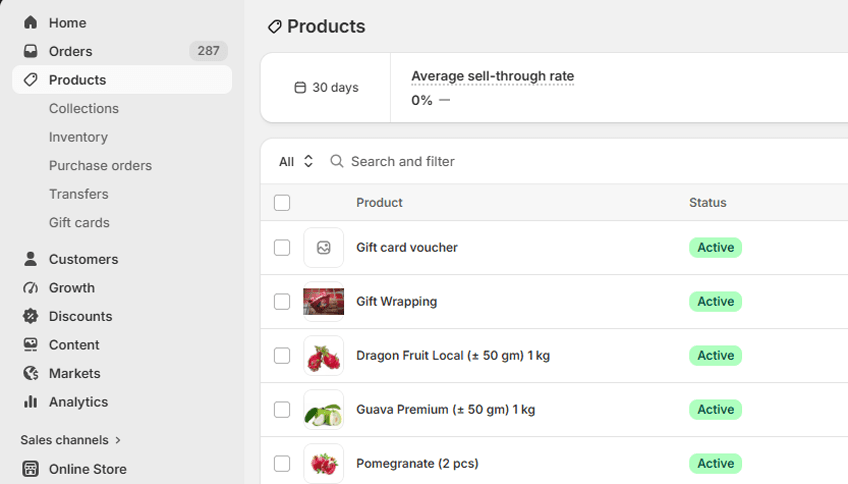
Click the name of the product you want to modify. Scroll down to the Inventory section.
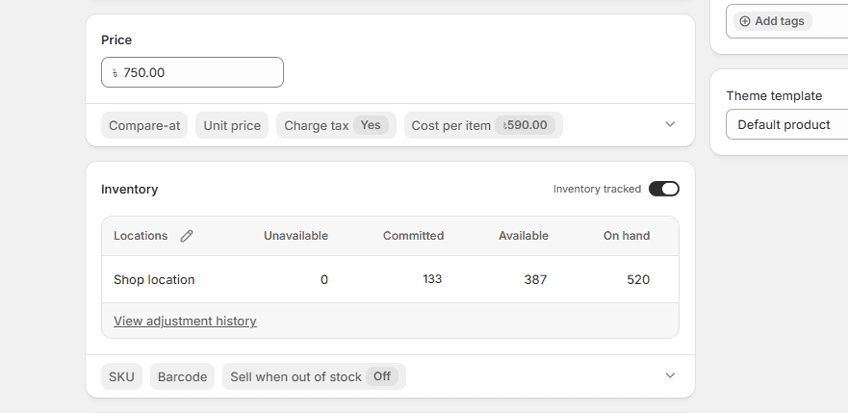
Locate the SKU (Stock Keeping Unit) field.
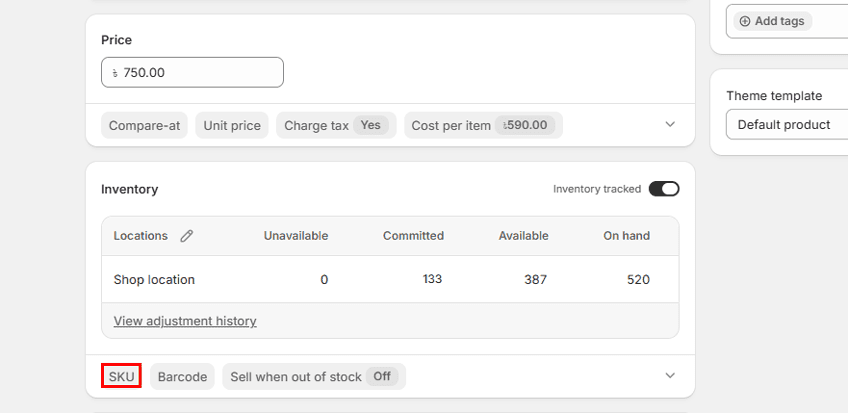
Type in your custom alphanumeric SKU code. Click Save in the top right corner.
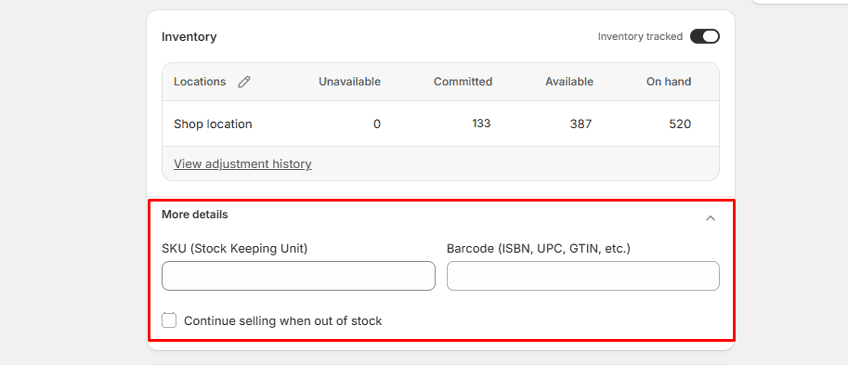
Method 2: Adding SKUs to Product Variants (Size, Color, Material)
If your product features multiple variations, each unique option combination requires its own distinctive SKU.
In your Shopify Admin, go to Products and click on the multi-variant item. Scroll past the main description down to the Variants section.
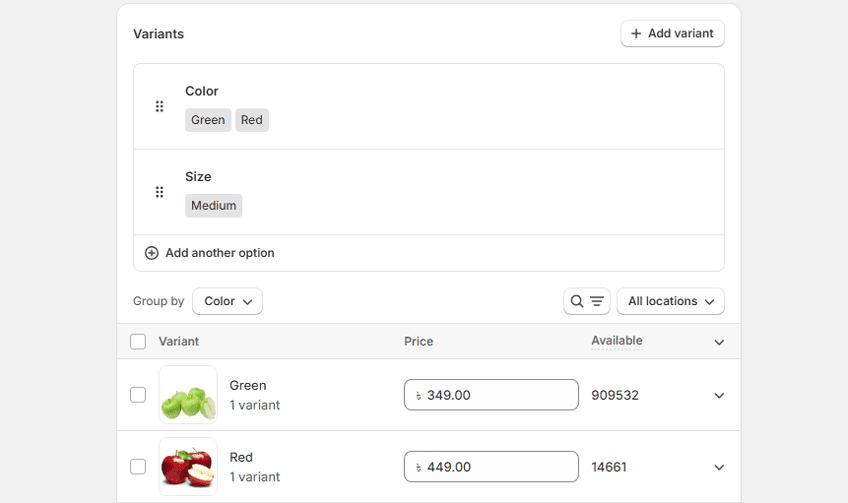
Locate the Variant Grid section. To set SKUs for all variant options at once, select all variants and click the Bulk Edit option.
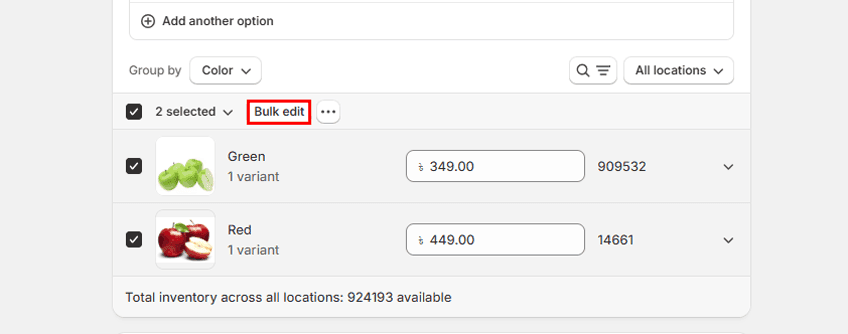
The Bulk Edit panel will open. Enter a unique alphanumeric SKU code for each variant, then click Save to apply the changes.

Why Scalable SKUs Matter for Growing Stores
Managing a storefront requires looking ahead to operational expansion. Clean SKUs unlock key operational efficiencies:
- Multi-Channel Synchronization: If you plan to sell on Amazon, eBay, or TikTok Shop alongside Shopify, matching SKUs across platforms is how inventory management apps sync your true stock levels.
- Fulfillment Accuracy: Warehouse management tools use SKUs to generate pick lists. Clear structures reduce costly packing mistakes.
- Granular Sales Analytics: Standardized coding lets you instantly filter reports to see if certain colors or styles outperform others across your entire inventory.
Critical SKU Implementation Mistakes to Avoid
- Reusing Old SKUs: If an item sells out and is permanently discontinued, retire that SKU. Reassigning it confuses sales data and messes up historical reports.
- Using Manufacturer SKUs Blindly: If you dropship or wholesale, using vendor codes can lead to duplicates if multiple suppliers use similar shorthand formats. Establish your own naming conventions instead.
Ready to Scale Your Shopify Store Faster?
Managing complex inventory is just one piece of the puzzle. If you want to move away from technical troubleshooting and focus on market expansion, explore our proven growth solutions.
From data-driven conversion-focused Shopify store architecture to custom development and advanced Shopify store optimization for performance, our team helps merchants eliminate technical friction and increase profitability.
Frequently Asked Questions
Can Shopify generate SKUs automatically?
Shopify does not feature an integrated, native automatic SKU generator for standard accounts. Merchants must enter codes manually or use a dedicated Shopify App Store utility (such as an SKU creator app) to populate them across large catalogs automatically.
What is the maximum character length for a Shopify SKU?
While Shopify allows up to 255 characters in the SKU text input field, you should aim for 8 to 12 characters to maintain clear scannable metrics and data readability.
Will changing an SKU delete my historical product data?
No. Changing an SKU code update inside Shopify edits the current inventory identifier. It preserves product traffic data, review histories, and overall sales trends, though your back-end inventory history logs will reflect the new identifier moving forward.
Do I need an SKU if I only sell digital products on Shopify?
While digital downloads do not require physical tracking slots, assigning SKUs to digital files remains an excellent practice. It simplifies multi-tier variant reporting and streamlines bundled offer management.
Final Checklist Before Launching Your SKU System
Before updating your inventory across your entire catalog, run your proposed system through this quick test:
- Is every single code completely unique across the entire store?
- Are all leading zeros removed from code designs?
- Have you substituted spaces and punctuation for clean hyphens or underscores?
- Is the structure clearly documented in an internal spreadsheet for your team?