

For e-commerce store owners, selecting a primary shipping carrier is one of the most critical decisions impacting your customer experience and your profit margins. High shipping costs are a leading cause of abandoned shopping carts, while slow transit times can quickly destroy your brand’s reputation.
When evaluating your fulfillment options, the central question inevitably becomes: which is better FedEx or UPS? While both giants provide robust global networks, they have vastly different pricing models, operational strengths, and native integrations with the Shopify ecosystem. This guide details everything you need to know to pick the ideal carrier for your e-commerce operations.
TL;DR: Quick Answer- Which is Better FedEx or UPS?
Neither carrier is universally superior. For most U.S.-based Shopify merchants, UPS is often the better starting carrier for domestic ground shipping, heavier packages, and simple Shopify Shipping workflows. FedEx is often better for express, overnight, time-sensitive, and selected international air shipments.
The best practical setup for many Shopify stores is not choosing only one carrier. Use UPS for everyday domestic ground orders and compare FedEx for express, urgent, or international orders where speed and service coverage matter more than the lowest ground rate.
Important note: This guide focuses mainly on U.S.-based Shopify merchants. Rates, discounts, surcharges, Shopify Shipping availability, delivery commitments, and carrier services can vary by country, Shopify plan, package profile, contract, and service level.
Table of Contents
What is FedEx?
FedEx Corp. is a global company offering transportation, e-commerce, and business services. It operates through segments like FedEx Express, FedEx Ground, and FedEx Freight. These segments provide specialized services to meet diverse shipping needs.
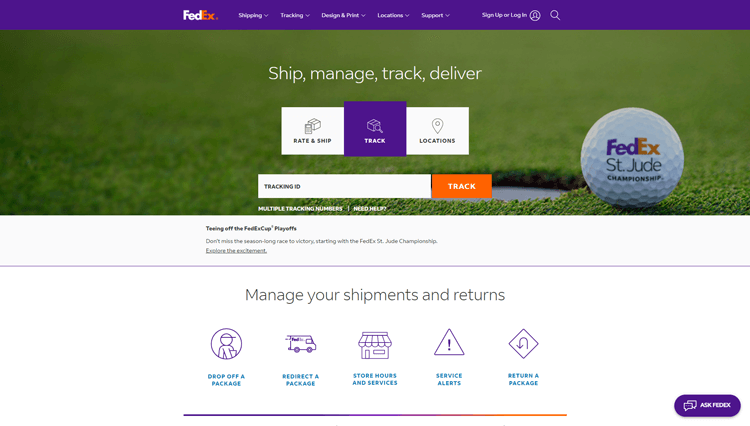
FedEx Express offers domestic and international shipping for packages and freight. It is known for fast and reliable delivery. FedEx Ground focuses on small-package ground delivery across the U.S. and Canada.
As a leader in express transportation, FedEx delivers to over 220 countries and territories. Its services connect markets representing more than 99% of the world’s GDP, ensuring timely global deliveries.
What is UPS?
UPS is a leading global package delivery company offering supply chain management solutions. It is known for its extensive fleet and global reach, providing reliable delivery services worldwide.

UPS operates one of the largest airlines and has a fleet of alternative fuel vehicles. The company differs from competitors in customer service, eCommerce strategies, and business structure.
According to UPS, they serve 1.6 million shipping customers and deliver to 10.2 million recipients across over 200 countries and territories every business day.
Recommended Blogs for You:
How to Edit Pages in Shopify – A Step-by-Step Guide
How to Sell on Walmart With Shopify: Step-By-Step Guide
How to Add More Payment Methods Shopify: Expand Your Payment Options
How to Add Sale Tag on Shopify: A Step-by-Step Guide
How to Add an About Us Page on Shopify: The Essential Guide
Final Verdict: FedEx vs UPS for Shopify Stores
| Store situation | Better starting choice | Why |
|---|---|---|
| Domestic ground shipping | UPS | Strong default option for ground-heavy ecommerce workflows and Shopify Shipping label buying. |
| Heavy or bulky products | UPS | Often a better first carrier to test for heavier domestic parcels and ground-focused fulfillment. |
| Overnight or 2-day delivery | FedEx | FedEx is a strong option for express and time-definite services. |
| International express orders | FedEx | FedEx can be a strong option for fast cross-border air shipments and detailed tracking. |
| International heavy parcels | Compare both | UPS can be competitive for heavier cross-border shipments, while FedEx may win on speed. |
| Small stores using Shopify Shipping | UPS | Shopify Shipping offers discounted rates from major carriers in the Shopify admin, including UPS in the U.S. |
| Stores with mixed order profiles | Use both | Multi-carrier routing helps choose the best service by weight, destination, and delivery promise. |
Bottom line: UPS is usually the better default for many domestic Shopify orders. FedEx is a strong secondary or primary carrier when your store depends on express delivery, international speed, or flat-rate express packaging.
FedEx vs UPS at a Glance
| Feature | FedEx | UPS | What Shopify merchants should do |
|---|---|---|---|
| Core strength | Express, overnight, and international air services | Domestic ground, heavier parcels, and dense delivery network | Use UPS as a ground baseline and FedEx for urgent or international lanes. |
| Shopify workflow | Can be used through carrier accounts and shipping apps; availability depends on region and setup | Commonly used through Shopify Shipping in supported markets | Test real rates inside Shopify or your shipping app before choosing. |
| 2026 rate environment | FedEx publishes rate-change updates and 2026 pricing changes on its official rate-change page. | UPS publishes rate and service guide information through its shipping costs and rates resources. | Do not rely only on base rates; compare final billed costs. |
| Flat-rate option | FedEx One Rate offers fixed-price U.S. shipping with FedEx packaging and eligible services. | UPS Simple Rate offers predictable flat-rate shipping by package size and speed within the U.S. | Compare flat-rate services for compact or predictable package sizes. |
| Tracking tools | Strong tracking and monitoring ecosystem for time-sensitive shipments | UPS My Choice and UPS Access Point options can improve delivery flexibility | Choose based on customer experience, not just rate. |
| Returns | FedEx Office and retail partner drop-offs can support return workflows | UPS Store and Access Point network can simplify returns | Pick the carrier that is easiest for your customers to return with. |
Sources for verification: FedEx rate changes, FedEx One Rate, UPS shipping costs and rates, UPS Simple Rate, and Shopify Shipping resources are linked in the Sources section at the end of this article.
Which is Better, FedEx or UPS: A Complete Comparison
Which is better, Fedex or UPS? Here is a complete comparison to help you decide which is better for your shipping needs:
History and Background
FedEx, originally Federal Express, was founded in 1971 by Frederick W. Smith. It revolutionized logistics with overnight shipping and real-time package tracking. Based in Memphis, Tennessee, its central location aids in fast, efficient shipping.
UPS, or United Parcel Service, was established in 1907 by James Casey in Seattle, Washington. It started as a local messenger service and grew into a global shipping giant. UPS is known for its brown trucks and strong domestic logistics network.
Both companies have significantly impacted global shipping, each excelling in different areas. FedEx leads in express services, while UPS is strong in ground delivery and logistics.
Global Reach and Market Presence
UPS and FedEx have extensive global operations, but their regional strengths differ.
FedEx has a strong presence in Europe and Asia, with major operations in China. Its hub in Guangzhou is ideal for businesses focused on Asian markets.
FedEx serves over 220 countries and territories with a fleet of more than 650 aircraft. It operates at more than 375 airports, supporting its strong global market presence.
UPS has a large operational footprint in Europe and is expanding in Asia and the Middle East. Its acquisitions enhance global reach and service capabilities, strengthening its international market position.
Services Offered
FedEx is known for fast air delivery, especially express services. Its large aircraft fleet supports quick international shipments, making it ideal for urgent business deliveries.
UPS excels in cost-effective ground shipping with its vast logistics network. It’s favored for reliable, economical delivery solutions for less urgent packages.
Technological Innovations
FedEx leads with advanced tracking technologies and uses robotics and AI in package sorting. Their technology provides real-time updates, enhancing customer experience.
UPS uses ORION software to optimize delivery routes, reduce fuel consumption, and improve efficiency. They also use drones for deliveries in remote areas.
Sustainability Efforts
FedEx aims for carbon neutrality by investing in electric vehicles and sustainable energy. Their FedEx Fuel Sense program reduces aircraft fuel consumption.
UPS invests in electric vehicles and alternative fuels, focusing on reducing delivery miles. This approach minimizes their carbon footprint while maintaining service quality.
Customer Satisfaction and Reliability
FedEx is valued for speed and tracking in express shipping, excelling in urgent business deliveries.
UPS ranks higher in ground shipping and is known for reliable handling and punctual service. Performance varies by location.
Pricing Structure
FedEx offers competitive international shipping rates and fast delivery. Costs may be higher due to air transport.
UPS is more cost-effective for domestic shipping, especially for heavier packages. Negotiating contracts can reduce costs for frequent shippers.
Specialized Packaging
FedEx provides specialized packaging solutions for irregular or temperature-sensitive items. UPS offers standard packaging options and focuses on cost-effective solutions for various shipping needs.
Corporate Social Responsibility (CSR)
FedEx collaborates with disaster relief organizations, using its logistics for preparedness and recovery efforts.
UPS focuses on diversity, sustainability, and volunteerism, supporting community development through grants and initiatives.
Integration with Business Systems
FedEx Compatible integrates services into business software, streamlining logistics and enhancing shipping management.
UPS Ready partners with business solutions, integrating functionalities into ecommerce and warehouse systems.
Technology and Tracking Advancements
FedEx uses SenseAware for real-time tracking of sensitive shipments, offering insights into conditions like temperature and humidity.
UPS developed UPS Flight Forward for drone deliveries, enhancing speed and accessibility in challenging locations.
🚀 Ready to skyrocket your Shopify store to success?
🚀 Unlock the secrets to success and boost your sales 📈 with ShopiBuffet’s expert services. Don’t miss out, get started now!
Why Choosing the Right Carrier Matters for Shopify Merchants
Shipping is not only a fulfillment task. It directly affects your conversion rate, customer satisfaction, support tickets, and profit margin.
A Shopify store can lose sales when shipping is too expensive at checkout. It can also lose repeat customers when delivery is slow, tracking is unclear, or returns are difficult. That is why the question which is better FedEx or UPS should not be answered with a simple brand preference.
The better question is:
Which carrier is better for your package size, destination zones, delivery promise, Shopify setup, and customer experience?
For many merchants, the best answer is a multi-carrier workflow: UPS for most domestic ground shipments, FedEx for express or international shipments, and a shipping app or Shopify workflow that compares rates automatically.
UPS vs FedEx: Which is best?
Both carriers offer similar services, reliability, and speeds. FedEx often has better retail rates, but UPS can be more competitive through services like Easyship, except for international shipments where FedEx excels.
Key Points:
- UPS is generally cheaper for domestic 2 lb packages in medium boxes.
- 2-day shipping offers significant savings over overnight for domestic routes.
- The best choice depends on your specific shipping needs, route options, and delivery timing.
Consider comparing shipping rates for your particular requirements to find the most cost-effective solution.

Bring your ideas to life for $1/month
The future of business is yours to shape. Sign up for a free trial and enjoy 3 months of Shopify for $1/month on select plans.
When should I use FedEx vs UPS?
Choosing between FedEx and UPS depends on your specific shipping needs and priorities. Here’s a breakdown to help you decide:
When to Use FedEx
- International Shipping: FedEx excels in international shipping with fast, reliable service to over 220 countries.
- Time-Sensitive Deliveries: FedEx is ideal for urgent deliveries due to its speed and advanced tracking.
- Advanced Tracking: FedEx offers detailed, real-time tracking updates for precise visibility on your shipment’s status.
- Specialty Shipping Needs: FedEx handles specialized shipments, like medical supplies or high-value items, with tailored solutions.
When to Use UPS
- Domestic Ground Shipping: UPS is more cost-effective for domestic ground shipping within the U.S. and Canada.
- Economic Solutions: UPS provides affordable rates for less urgent deliveries, especially for heavier packages.
- Innovative Delivery Options: UPS features advanced delivery methods, including drone services in specific locations.
- Strong Logistics Infrastructure: UPS’s extensive network supports robust logistics and supply chain management in North America.
Shipping Cost Comparison: FedEx vs UPS
There is no universal cheapest carrier between FedEx and UPS. The cheaper option depends on:
- Package weight
- Package dimensions
- Shipping zone
- Residential vs commercial address
- Delivery speed
- Fuel surcharge
- Delivery area surcharge
- Additional handling fees
- Flat-rate eligibility
- Shopify Shipping discounts
- Negotiated carrier contracts
- Return shipping needs
Shipping Cost Alert: For residential ecommerce deliveries, surcharges and minimum charges can make your actual shipping cost much higher than the published base rate. Always compare the final quoted cost, not only the base transportation rate.
Base rates do not tell the full story
A Shopify merchant should not choose FedEx or UPS based only on public rate tables. Public rate tables may not reflect your Shopify discounts, negotiated rates, packaging, surcharges, or special handling requirements.
For example, a package can look cheap at the base rate level but become expensive after residential delivery fees, delivery area surcharges, fuel charges, or dimensional weight adjustments.
Why 2026 rate changes matter
FedEx and UPS both operate in a changing rate environment. FedEx publishes official rate-change updates, including adjustments to list rates, fees, fuel surcharges, and FedEx One Rate pricing. UPS provides rate and service guide resources for current shipping costs, rates, and fees.
For Shopify merchants, the lesson is simple: do not rely on last year’s shipping assumptions. Review your most common order profiles again in 2026.
Dimensional weight can change the winner
Both carriers may bill by dimensional weight when a box is large relative to its actual weight. This matters for products like pillows, lamps, plastic goods, oversized accessories, gift boxes, and lightweight home decor.
Dimensional Weight = (Length x Width x Height) / DIM Divisor
If your product weighs 3 lb but the box size creates a 12 lb dimensional weight, the carrier may bill you closer to the 12 lb rate. That can change whether FedEx or UPS is cheaper.
Flat-rate shipping can help in specific cases
FedEx One Rate and UPS Simple Rate can both help merchants create more predictable shipping costs, but they are not identical.
| Flat-rate option | Best used when | Watch out for |
|---|---|---|
| FedEx One Rate | You want fixed-price U.S. shipping with eligible FedEx packaging and services. | It may not beat negotiated or Shopify-discounted rates for every shipment. |
| UPS Simple Rate | You want predictable U.S. shipping based on package size and speed. | Package size, service, and eligibility rules matter. |
Speed and Reliability: FedEx vs UPS
Domestic ground delivery
For standard domestic delivery, UPS is often a strong starting point because many Shopify merchants use ground shipping for their default delivery promise. UPS can work especially well when your fulfillment is mostly regional or national ground delivery.
FedEx Ground and FedEx Home Delivery can also be competitive. The better option depends on your origin ZIP code, destination zones, residential delivery mix, and negotiated discounts.
Express and overnight delivery
FedEx is often a strong choice for express delivery because of its focus on overnight, 2-day, and time-definite shipping services. UPS also offers strong air services, so the final decision should come from test rates and delivery commitments for your actual lanes.
Choose express services carefully. A customer who pays for fast delivery expects accurate tracking, clear cutoff times, and dependable fulfillment operations from your store.
International delivery
For international Shopify orders, FedEx can be a strong option for express air shipments. UPS can also be competitive, especially for certain cross-border, heavier, or contract-based shipments.
International shipping decisions should include:
- Duties and taxes
- DDP vs DDU checkout experience
- Customs documentation
- Delivery speed
- Tracking visibility
- Return complexity
- Total landed cost
For many international Shopify stores, using only one carrier is risky. Compare FedEx and UPS for your top destination countries before setting default rates.
Shopify Integration and Fulfillment Workflows
Shopify Shipping
Shopify Shipping lets merchants buy and print shipping labels from the Shopify admin in supported regions. Shopify states that its built-in shipping tools can provide discounted rates from major carriers, including USPS, UPS, and DHL in the U.S., Canada Post in Canada, and Sendle in Australia.
For small stores, this is often the easiest starting point because it keeps fulfillment inside Shopify and reduces the need for a separate shipping platform.
FedEx with Shopify
FedEx can be connected through carrier accounts, third-party apps, and shipping platforms depending on your setup. This can be useful if your store needs FedEx express services, international shipping, or custom contract rates.
Use FedEx with Shopify when:
- You need FedEx express or international options.
- You already have a FedEx account or negotiated rates.
- You use a shipping app that supports FedEx automation.
- You need shipping rules based on speed, weight, or destination.
UPS with Shopify
UPS is commonly used by Shopify merchants for domestic shipping workflows, label buying, and discounted rates where Shopify Shipping supports it.
- You want a simple domestic ground workflow.
- You ship heavy or bulky products.
- You want to compare discounted rates inside Shopify.
- You want a familiar return network for customers.
Third-party multi-carrier apps
Use UPS with Shopify when:
As your store grows, a multi-carrier app can help you compare FedEx, UPS, USPS, DHL, regional carriers, and 3PL options from one workflow.
Common use cases include:
- Rate shopping by order
- Shipping rules by weight or destination
- International DDP tools
- Return label automation
- Branded tracking pages
- Split shipments
- Warehouse routing
Example automation rule:
If package weight is under 5 lb and the customer selected express shipping, compare FedEx One Rate and UPS 2nd Day Air. If package weight is over 20 lb and the order is domestic ground, compare UPS Ground and FedEx Ground before buying the label.
Best Carrier by Shopify Store Type
| Shopify store type | Better starting carrier | Recommended approach |
|---|---|---|
| Small domestic DTC store | UPS | Start with Shopify Shipping and compare UPS Ground against other available services. |
| Apparel brand | UPS | Use UPS for ground and returns; compare FedEx for expedited upgrades. |
| Heavy home decor store | UPS | Test UPS Ground first, but check dimensional weight and handling fees. |
| Fitness equipment store | UPS | Compare heavy-package pricing and large-package surcharges before committing. |
| High-value electronics store | FedEx or UPS | Choose based on tracking, signature, declared value, and claims process. |
| Subscription box business | Test both | Since package size is predictable, run a rate audit by ZIP zone. |
| International-first store | FedEx + UPS | Use FedEx for express lanes and test UPS for heavier or cross-border shipments. |
| B2B wholesale store | UPS | UPS is often a strong starting point for heavier domestic B2B shipments. |
| Premium gift brand | FedEx | Compare FedEx express and flat-rate options for faster delivery promises. |
Example Shipping Scenarios
Example 1: Lightweight apparel order
If you ship a 2 lb apparel package to a residential address, UPS may be a good default option through Shopify Shipping. However, you should still compare FedEx Ground, FedEx Home Delivery, and any available discounted rates.
Best approach: test your top ZIP zones and compare total cost after residential and delivery area fees.
Example 2: Heavy home decor item
If you ship a 35 lb home decor item in a large box, UPS Ground is often a strong starting point. But dimensional weight, large-package rules, and additional handling fees can quickly change the final cost.
Best approach: compare actual billed weight, not just physical weight.
Example 3: International express order
If a customer outside the U.S. needs fast delivery, FedEx International Priority may be worth comparing first. UPS may still be competitive for heavier international shipments or specific cross-border routes.
Best approach: compare total landed cost, duties, taxes, delivery speed, and DDP support.
Example 4: Subscription box with fixed dimensions
If every monthly subscription box has the same weight and dimensions, you can run a clean side-by-side test between FedEx and UPS.
Best approach: export your last 90 days of destination ZIP codes, then compare rates for your most common zones.
How to Choose Between FedEx and UPS in 5 Steps
- Export your last 90 days of Shopify orders. Include weight, dimensions, destination ZIP code, delivery method, and shipping revenue collected.
- Group orders by shipping pattern. Separate domestic ground, express, international, heavy, oversized, and return shipments.
- Compare FedEx and UPS for your top 10 scenarios. Use Shopify Shipping, your carrier accounts, or a shipping app.
- Include surcharges. Do not compare only base rates. Include residential, fuel, delivery area, dimensional weight, additional handling, and declared value costs.
- Create carrier rules. Use UPS for the scenarios where it wins, FedEx where it wins, and revisit your data every quarter.
FedEx vs UPS for Returns
Returns are part of the ecommerce experience. The better return carrier depends on your customer locations, return policy, packaging requirements, and drop-off convenience.
UPS may be easier for some customers because UPS Store and UPS Access Point locations are familiar in many U.S. areas. FedEx also supports returns through FedEx Office and retail partner locations.
For Shopify merchants, the best return workflow should answer these questions:
- Can the customer print a label or use a QR code?
- Is there a convenient drop-off location nearby?
- Can the item be returned without original packaging?
- Does the return label cost fit your margin?
- Can your Shopify return app automate the process?
If returns are frequent in your category, do not choose a carrier only by outbound shipping cost. The return experience can affect repeat purchases and support volume.
FedEx vs UPS for Tracking and Customer Experience
Both FedEx and UPS offer detailed tracking, but the customer experience depends on how you integrate tracking into Shopify.
A strong Shopify post-purchase workflow should include:
- Automatic tracking emails
- Branded tracking page
- Delivery exception alerts
- Clear estimated delivery date
- Easy return instructions
- Support team visibility into shipment status
UPS My Choice can help customers manage deliveries, reroute eligible packages, and use alternative delivery options. FedEx also offers tracking and monitoring tools that can support more sensitive shipping workflows.
For Shopify merchants, the best tracking setup is the one that reduces “Where is my order?” tickets.
Common Mistakes Shopify Merchants Make When Choosing FedEx or UPS
Mistake 1: Comparing only one package size
Your best carrier for a 1 lb product may not be the best carrier for a 30 lb product. Test your actual package mix.
Mistake 2: Ignoring residential surcharges
Many ecommerce orders go to home addresses. Residential fees can change your real shipping cost.
Mistake 3: Forgetting dimensional weight
Large but lightweight packages can be billed at a much higher weight than expected.
Mistake 4: Choosing one carrier for every order
A single-carrier setup is simple, but it may cost more as your order volume grows.
Mistake 5: Not reviewing rates after carrier updates
Carrier pricing changes regularly. Review your shipping strategy after rate updates and whenever your product mix changes.
Frequently Asked Questions
Which is better FedEx or UPS for Shopify store owners on a tight budget?
For standard residential ground deliveries, UPS is often better out-of-the-box because of the steep pre-negotiated discounts built directly into the native Shopify Shipping platform (up to 86% off retail rates). However, if you are shipping small, heavy items over long distances, FedEx One Rate can be more cost-effective since it eliminates unexpected zone and fuel surcharges.
What is the difference between FedEx Home Delivery and UPS Ground?
FedEx Home Delivery is a specialized branch of the FedEx network that operates seven days a week (including Sundays at no extra charge) specifically for residential deliveries. UPS Ground delivers to all addresses seven days a week as well, but its pricing structure splits commercial and residential fees tightly. In 2026, the residential surcharge for FedEx Ground is $6.45, while UPS Ground is $6.50.
How do the 2026 rate increases affect my calculation of which is better FedEx or UPS?
While both carriers announced a headline General Rate Increase (GRI) of 5.9%, your actual costs will likely rise by 8% to 12%. This is because minimum charges have risen to $11.99, and key surcharges—such as residential fees and additional handling for large dimensions—increased significantly above the 5.9% average baseline. You must run a sample manifest audit to see which carrier’s surcharges penalize your specific product dimensions more.
Can I use both FedEx and UPS on my Shopify store?
Yes, using a multi-carrier strategy is highly recommended. By integrating applications like ShipStation or Easyship into your Shopify store, you can display live, real-time rates from both carriers at checkout and automate your fulfillment to select whichever carrier is most cost-effective for each specific order.
Who handles international shipping better for e-commerce, FedEx or UPS?
FedEx is widely considered superior for fast international air express shipping because of its expansive proprietary air cargo network and efficient global customs clearance. UPS is highly competitive and often more cost-effective for cross-border ground shipping into Canada and Mexico.
What happens if a carrier loses a package shipped from my Shopify store?
Both carriers include up to $100 of standard declared value liability insurance on most domestic shipments. If your item is valued above $100, you must explicitly purchase additional declared value coverage during label generation or use a third-party Shopify insurance plugin like Route to protect your shipments.
What is FedEx One Rate?
FedEx One Rate is a flat-rate shipping option for eligible U.S. shipments using FedEx packaging and eligible services. It can help merchants create predictable shipping costs, especially for compact products and express delivery upgrades.
Conclusion: Which Is Better FedEx or UPS?
FedEx and UPS are both strong shipping carriers, but they are not equally strong for every Shopify store.
Choose UPS as your starting point if your store mostly ships domestic ground orders, heavier products, bulky items, or standard ecommerce packages through Shopify Shipping.
Choose FedEx as your starting point if your store depends on overnight delivery, express shipping, selected international air routes, or predictable flat-rate express options.
For many Shopify merchants, the best answer is to use both. Compare real rates using your own order history, build shipping rules by package type, and review your carrier mix regularly as rates, surcharges, and customer locations change.